No products in the cart.
NEWS | December 8, 2025

NEWS | December 8, 2025
In the world of professional flight training, aircraft selection isn’t just about specifications on paper. It’s about reliability when you’re putting 50 students through their paces every year. It’s about whether your instructors trust the platform enough to take a nervous PPL student through their first solo. And it’s about whether that aircraft will still be turning heads on the ramp while delivering consistent performance five years down the line.
That’s exactly why Horizon Swiss Flight Academy’s recent decision to add Bristell to their training fleet caught our attention. As one of Switzerland’s largest flight schools and a sister company to Helvetic Airways, their standards aren’t just high—they’re airline-level. When they invest in new aircraft, they’re not just thinking about today’s training flights. They’re thinking about the pilots who’ll be sitting in the left seat of an Embraer E2 or an Airbus A320 five years from now.
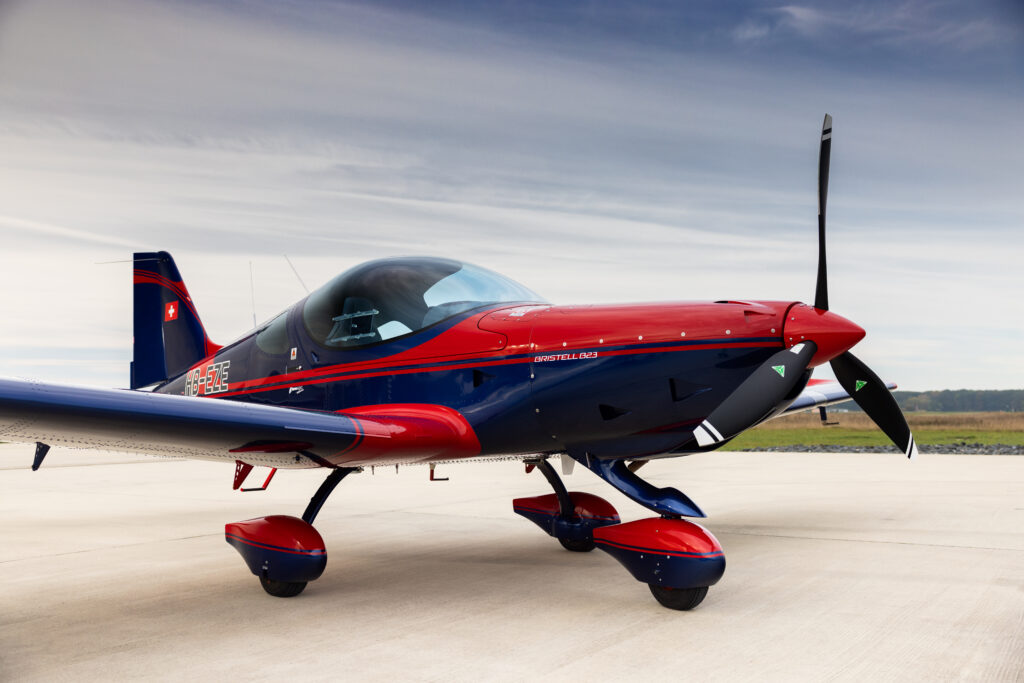
This wasn’t an interview over email. It happened in Kunovice, during the handover of two new Bristell aircraft to Horizon Swiss Flight Academy. While the aircraft were being prepared for departure to Switzerland, we spoke with instructors and experienced pilots — Marc Lüchinger and Urs Engesser — about why their choice was so straightforward.
When asked whether they had considered other manufacturers, the team clarified that they had evaluated several options. However, the decision quickly converged on the B23 — thanks to its value for money, strong reputation, and positive experience from partner flight schools.
But this wasn’t a leap of faith. It was a decision built on something more valuable than brochures and demo flights: real-world experience from their partner schools. Horizon Swiss Flight Academy had been watching Bristell’s performance in flight training operations in Switzerland for years. They’d seen the dispatch reliability. They’d heard the feedback from instructors who were actually flying these aircraft day in, day out. And perhaps most tellingly, they’d noticed a pattern that’s hard to ignore in Swiss aviation: almost every flight school buying new aircraft was choosing Bristell.“Bristell is currently one of the most successful aircraft in Switzerland,” they told us. “Nearly every school that buys new aircraft buys Bristell.” When you’re making a decision that will impact your operation for the next decade, that kind of market validation matters.
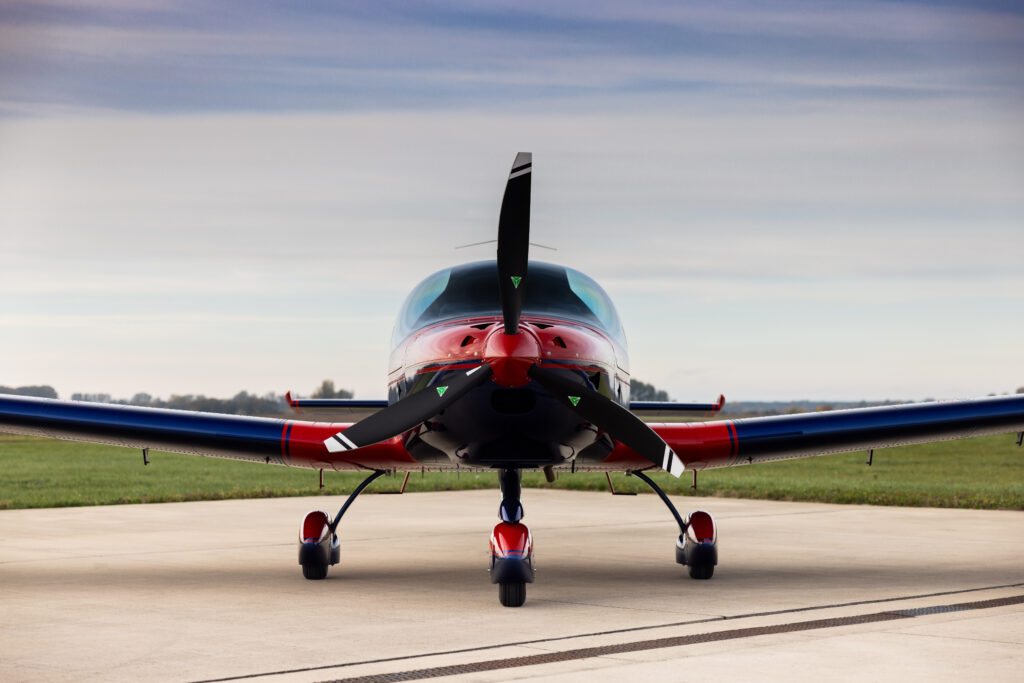
Here’s where Horizon’s choice gets interesting. They opted for the Rotax 912iS configuration—the 100 hp version—when higher-powered options were available. It might seem counterintuitive, but their reasoning reveals a sophisticated understanding of flight training economics and pedagogy.
The aircraft will primarily serve students building time between their PPL and CPL licenses. These aren’t hours where you need maximum performance. These are hours where you need maximum reliability, predictable handling, and—let’s be honest—operational efficiency. “It’s not a rocket,” they said with characteristic Swiss pragmatism, “but for hour-building, for our purpose, it’s enough.”
This decision reflects something we see too rarely in aviation: matching the aircraft precisely to the mission rather than over-specifying because the capability exists. It’s the kind of operational thinking that keeps costs manageable while maintaining training quality—exactly what sustainable flight schools need.
The real test of any training aircraft isn’t what the manufacturer claims—it’s what happens when you put a student pilot in the left seat. And this is where the feedback from Horizon gets particularly interesting.
Their instructors describe the Bristell as exceptionally stable and calm to handle. Stall recovery, they note, is among the easiest they’ve experienced. But perhaps the most telling endorsement came from an unexpected source: a student who’d done his PPL on a legacy training aircraft. His reaction after his first flight in the Bristell? “Whoa, what is this?!”
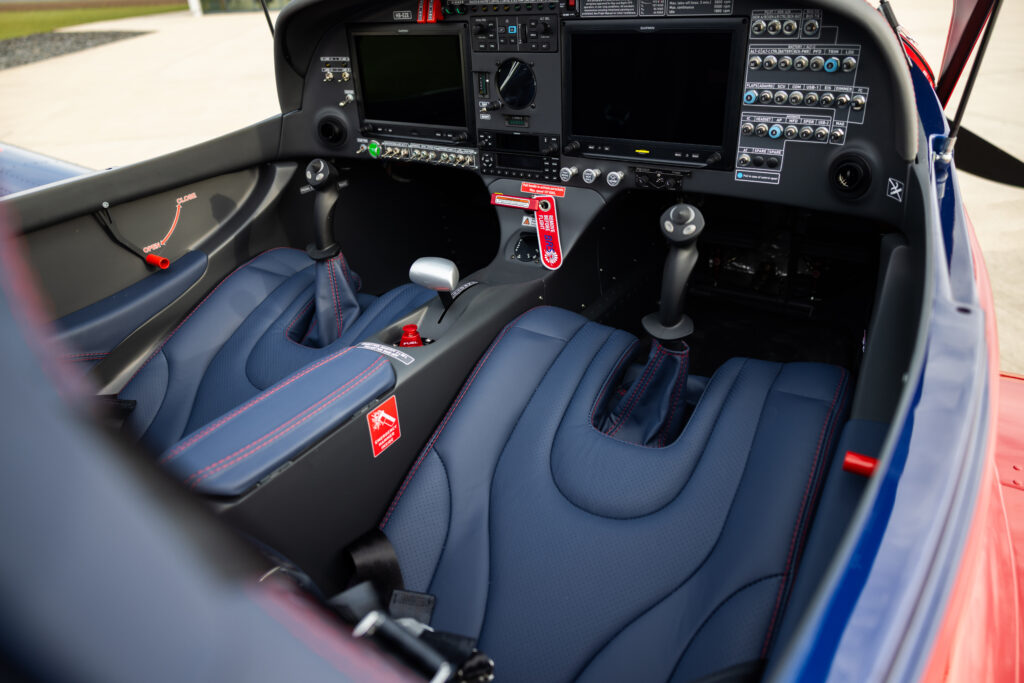
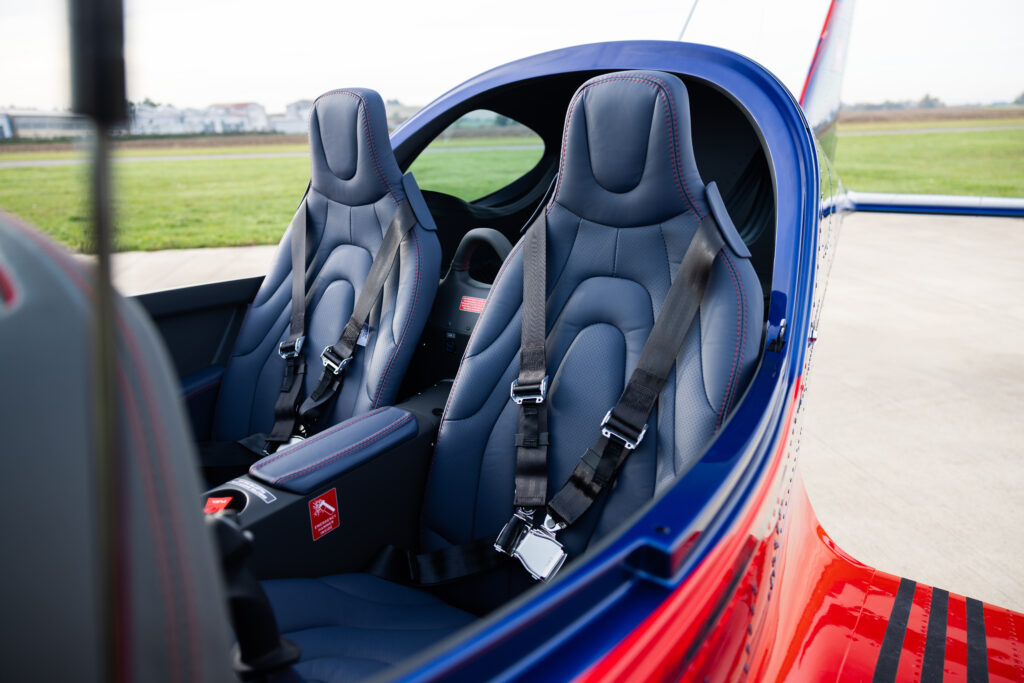
That response isn’t just about the comfort of a newer aircraft. It’s about the difference between learning in an environment designed in the 1970s versus one that incorporates modern thinking about situational awareness and cockpit design. The Garmin G3X glass cockpit with synthetic vision option isn’t just impressive technology—it’s preparing students for the glass cockpits they’ll encounter in their airline careers. The ballistic parachute isn’t just a safety feature—it’s teaching decision-making and risk management in ways that simply weren’t possible in older training aircraft.
One of their instructors emphasized this point about situational awareness: “With the synthetic vision you have as an option, the parachute, and the efficiency with the engine—at the moment, I think there is no other aircraft like the Bristell B23.” When you’re training pilots who’ll need to demonstrate competencies in situational awareness, procedure management, and decision-making for evidence-based training requirements, that matters.
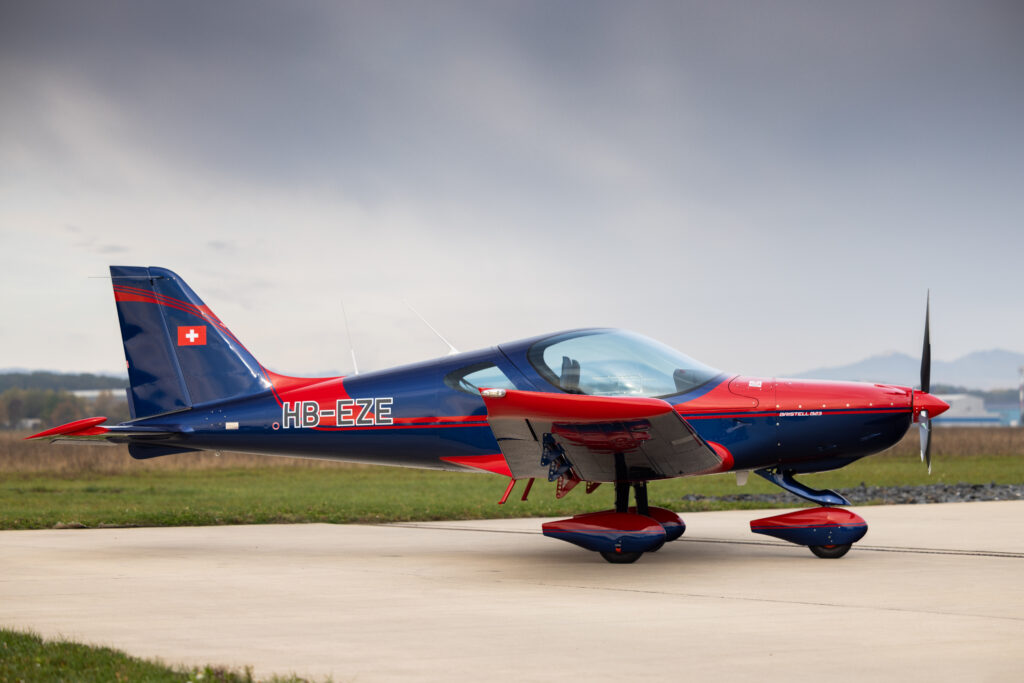
Anyone who’s seen Horizon’s Bristell on the ramp has probably noticed the striking red and blue color scheme. There’s a story there that reveals something about both the school and their relationship with BRM Aero.
“Our CEO originally wanted just one color,” they recalled with a laugh. “Then the staff told him, ‘Hey no, you can’t do just one color—how boring!’ So we went for the Horizon colors, red and blue, matching our logo.”
The customization process worked smoothly. When they requested the small opening windows in the canopy—a detail they’d learned from their partner schools about managing summer heat—BRM Aero accommodated without hesitation. It’s the kind of attention to operator feedback that distinguishes manufacturers who see aircraft delivery as the beginning of a relationship rather than the end of a transaction.
If you talk to enough flight school operators, you’ll hear versions of the same story: great aircraft, disappointing support. Horizon’s experience with BRM Aero runs counter to that narrative in ways that matter operationally.
“What impressed us is how they’re really trying to help you solve problems,” one of their instructors explained. “It’s not just you pay for the aircraft and that’s it.” He cited a specific example: a Swiss glider towing club experienced oil temperature issues during summer operations with heavy gliders. BRM Aero didn’t just acknowledge the problem—they worked actively on solutions, including modifications like a second oil cooler.
“That’s what we feel as customers,” they said. “You’re still a family company.”
The team also mentioned their visit to the manufacturing facility in Kunovice. They came away impressed not just by the cleanliness and organization—though that matters—but by the transparency of the process and the friendliness of the team. In an industry where “factory visit” is often perfunctory marketing, their genuine enthusiasm suggested they’d seen something that resonated with their own values about how to run a quality operation.

Switzerland means mountains. And mountains mean flight schools need aircraft that perform reliably in conditions that would make many trainers struggle. The feedback here was unequivocal: “The performance is more than enough, and if you’re considering flying in the mountains, the turbo version is a big advantage.”
It’s worth noting that Horizon isn’t alone in reaching this conclusion. The pattern of Swiss flight schools consistently choosing Bristell isn’t coincidental—it’s a direct response to the aircraft’s proven performance in exactly the kind of demanding operations that Swiss aviation requires. When you’re training in the Alps, theoretical performance numbers matter less than how the aircraft actually handles when your student is learning mountain flying in real conditions.
Toward the end of our conversation, we asked what Horizon would tell other schools considering Bristell. Their advice was remarkably straightforward: start by talking to operators who already fly them. The reference list speaks for itself.
Second, consider carefully which engine configuration fits your environment and training profile. The B23–912iS is exceptionally efficient for time-building and day-to-day training. The B23–915iS, well-suited for VFR programmes, offers significantly more performance where it’s needed. The upcoming B23–916iS delivers maximum capability in high-altitude operations. With fuel-efficient Rotax powerplants, MOGAS/Avgas capability, low emissions and a TBO rated up to 2,000 hours, Bristell aircraft are engineered to keep operating costs predictable and training sustainable.
Third, communicate with BRM Aero. Whether it’s customization, technical support or problem-solving, Horizon emphasized that the manufacturer’s involvement continues long after delivery. The combination of modern avionics, integrated flight-analysis tools, and a 24/7 spare-parts and technical support network makes daily operations smoother, safer and more efficient.
But perhaps the most important message isn’t what they said—it’s what their decision demonstrates. When a highly professional operation with direct connections to major European airlines, training 50 ATPL students annually, chooses an aircraft without looking at alternatives, that’s not impulse. That’s confidence built on real-world performance.
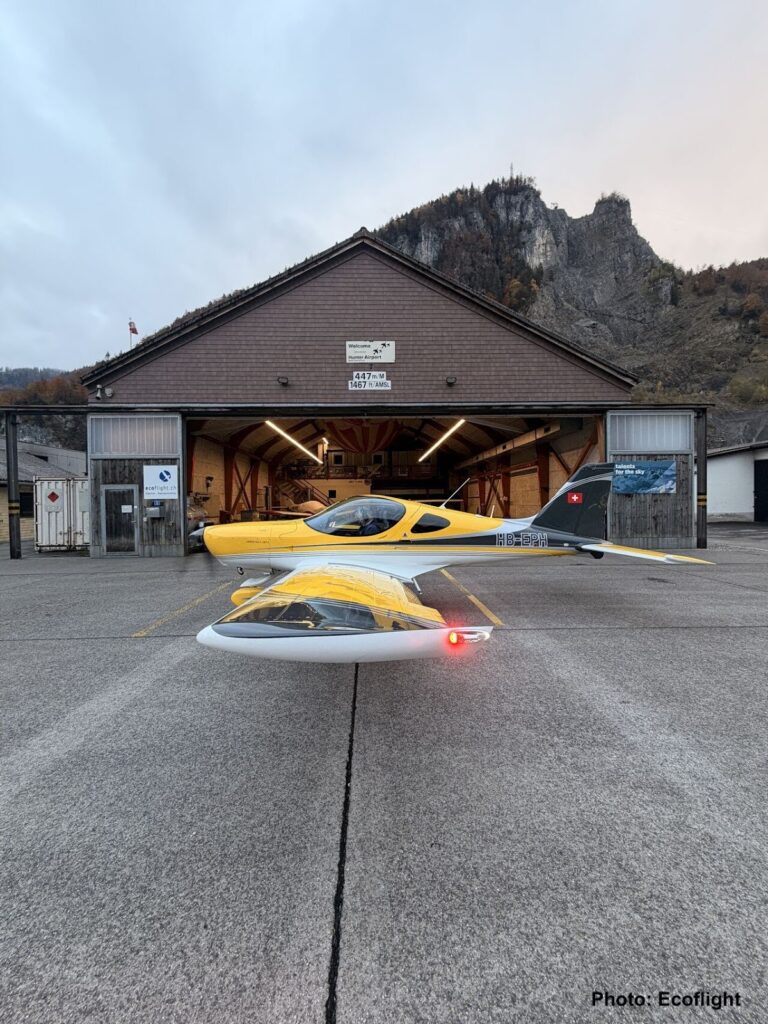
Horizon Swiss Flight Academy’s aircraft represent part of a remarkable expansion in Switzerland. In 2025 alone, eight new Bristell aircraft joined the Swiss fleet, bringing the total to 30 aircraft now operating in Swiss and European skies. The latest delivery was a B23-915 Turbo that joined Ecoflight’s fleet in Mollis, bringing their Turbo Bristell count to four, including one with IFR equipment.
Four of these new additions are the recently CS23-certified B23-912iS with its fuel-efficient 100 hp Rotax injection engine and single lever control. Two went to ASFG Ausserschwyzer Fluggemeinschaft Wangen, and two joined Kreutzer Aviation, which have been purchased by Horizon Swiss Flight Academy for the training of their flight students. The model is proving ideal for basic training while simultaneously serving as a state-of-the-art touring aircraft.
As winter approaches and these 30 Bristell aircraft continue their operations over snowy Switzerland, the fleet represents more than just market success—it demonstrates what happens when aircraft capabilities align precisely with operator needs, backed by genuine manufacturer support.
Interested in learning more about why Swiss flight schools consistently choose Bristell? The conversation is easier than you might think. Contact BRM Aero (info@bristell.com) to discuss your specific training needs, arrange a demo flight, or visit the manufacturing facility in Kunovice to see the quality and attention to detail that impressed Horizon Swiss Flight Academy